Dust Perception Factor – Dust Analysis
What this shows
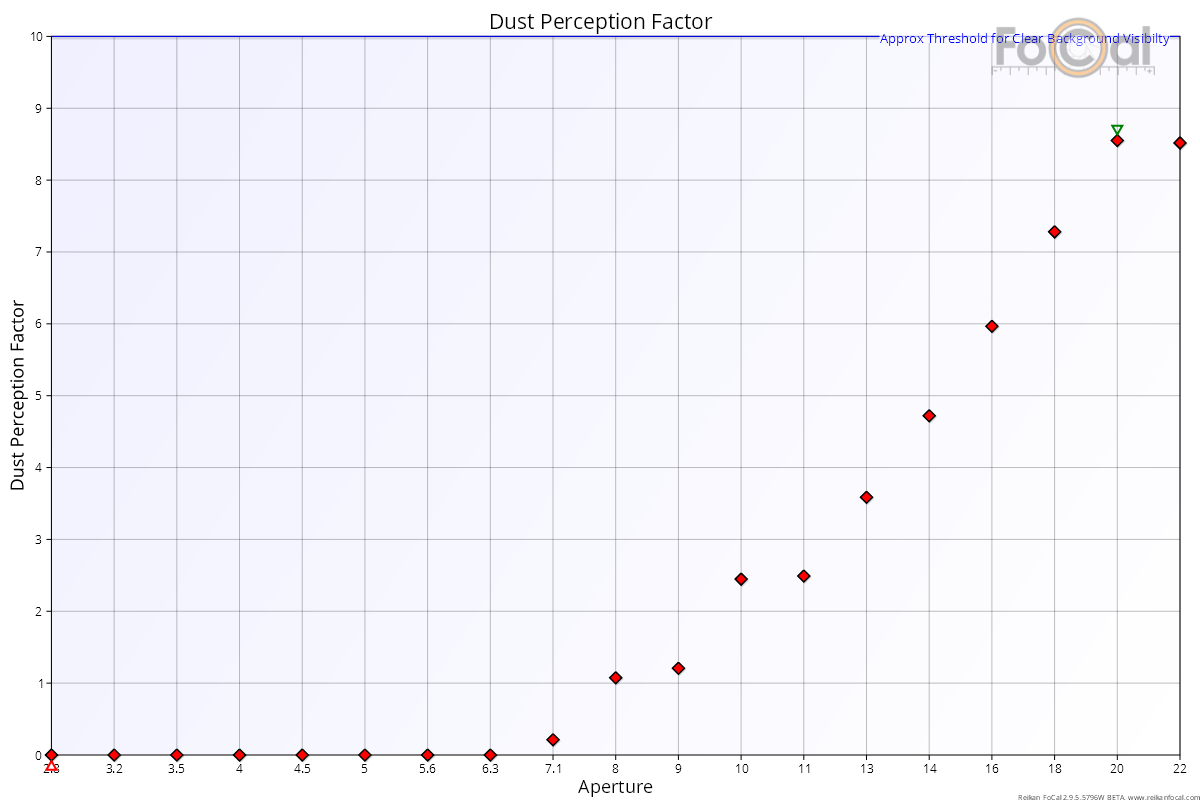
The Dust Perception Factor (DPF) is an experimental measure of how likely the dust is to be noticed in a picture, at each aperture tested.
How to read it
- Horizontal axis: aperture, wide apertures on the left.
- Vertical axis: Dust Perception Factor, from 0 to 25. A value above 25 is shown with a marker at the top edge. Higher means the dust is more likely to be noticed.
Key:
- Markers: the DPF at each aperture.
- Green triangle: the highest value. Red triangle: the lowest value.
- Blue horizontal line at 10: the approximate point where dust becomes visible against a plain background.
FoCal calculates the DPF from how many high-confidence dust spots there are, how big they are and how opaque they are.
What good looks like
Values below the blue line at the apertures you use. Dust below the line is unlikely to be noticed, even against a plain background such as sky.
If it looks wrong
- If the DPF is above the line at apertures you use, consider cleaning the sensor, then run the test again.
- The DPF is a guide, not a rule. How noticeable dust is depends a lot on the picture: a busy scene hides dust that a plain sky shows. The DPF can't allow for that, and it can be wrong in some situations.